
ORP GROM was one of the most modern destroyers of the Polish Navy at the outbreak of World War II. Together with her sister ship ORP Błyskawica, she was built by J. Samuel White in Cowes, Great Britain, in the second half of the 1930s.
With a length of about 114 meters, an engine power of about 54,000 horsepower and a speed of close to 39 knots, the Grom class was among the fastest and most heavily armed destroyers of its generation. The main artillery consisted of seven Swedish 120 mm Bofors guns.
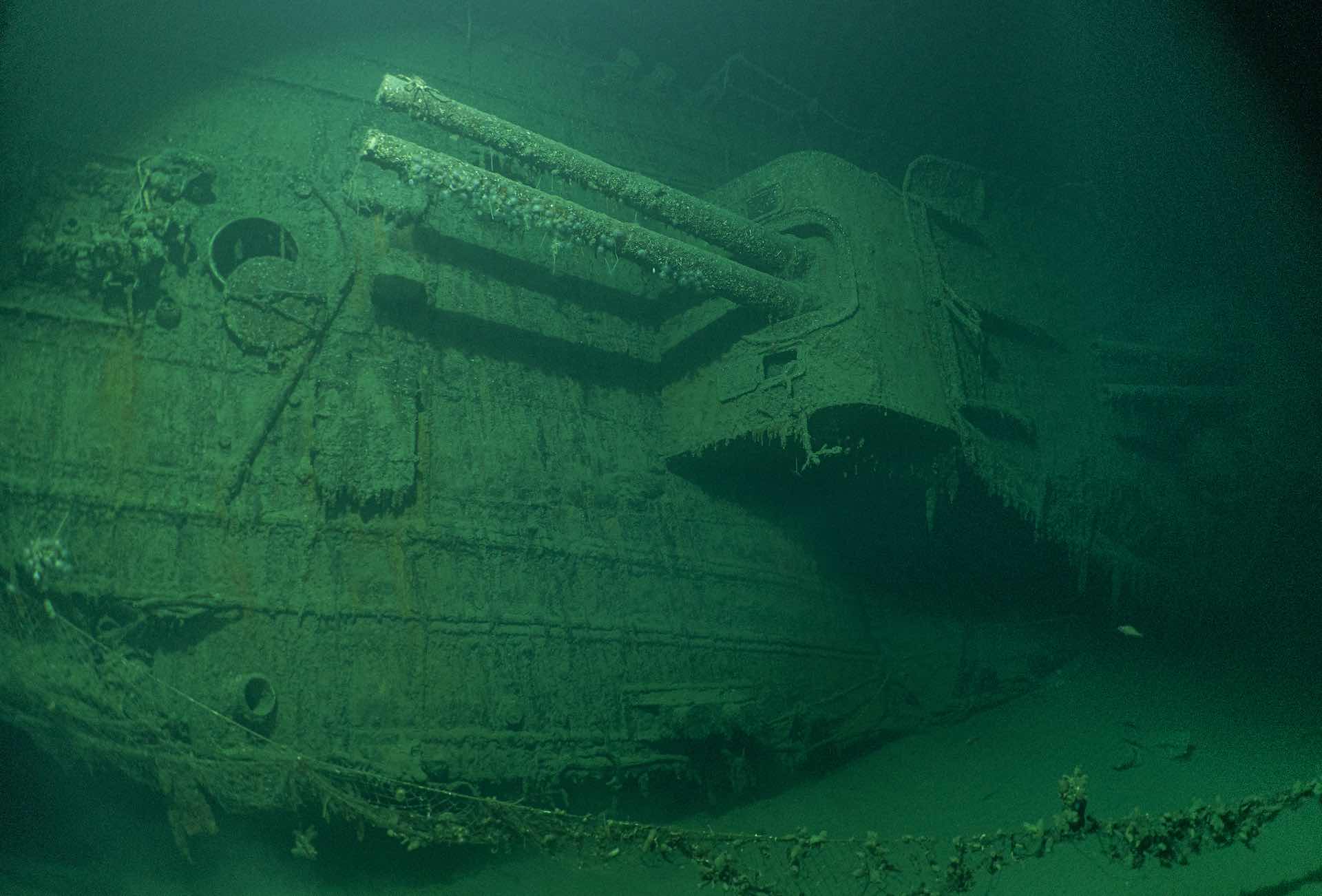
On the morning of 4 May 1940, Grom was in the area outside Rombaksfjorden.
At around 08:30, the ship was attacked by a German Heinkel He 111 bomber. Two 250kg bombs hit amidships. The hits were followed by a violent internal explosion and the ship’s hull broke in two. She disappeared below the surface in just two to three minutes.
There were 213 men on board. Of these, 59 died, while 154 survived and were rescued from the fjord by nearby British warships.
Both main parts of Grom sank down the steep underwater terrain in Rombaksfjorden but came to rest on an underwater plateau. The wreck today lies at a depth of approximately 115 metres. The bow is upside down while the stern section is completely on its side, with the port side up.
Built: 1936 by White & Co. Ltd., Cowes, UK
Dimensions: 114.0 x 11.3 x 3.3 metres
Tonnage: 2,183 DVT
Engine: 2 x Parsons steam turbines, 54,000 hp, 39 knots
Date sunk: 4 May 1940
Cause: Air raid
Deaths: 59 men
Location: Off Oreneset north of Narvik
Depth: 72–115 metres